


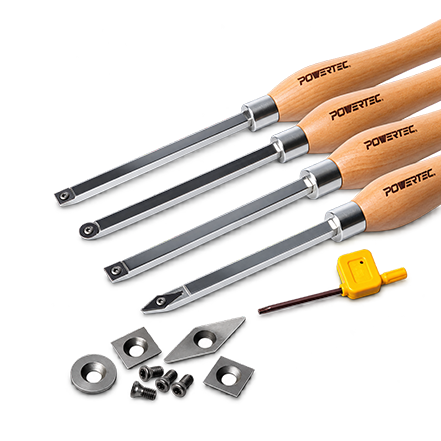
Turning / Lathe Tools
Turning and lathe tools remove material from rotating workpieces to produce outside diameters, faces, grooves, tapers and profiles. Network Industrial supports global sourcing enquiries for turning tools used in CNC production, machine repair and precision engineering. A suitable tool depends on workpiece material, the required operation, toolholder interface and machine rigidity.
A carbide insert that resembles the existing one may still have a different grade, nose radius or chipbreaker. Buyers should identify the full holder and insert references instead of replacing tooling by appearance.
Description
Description
Industrial Applications
Turning tools are used to manufacture shafts, sleeves, bushings, threaded components and other rotational parts. Facing produces an end surface; profiling produces contours; grooving and parting tools create recesses or separate a component. Internal turning requires an appropriate holder and sufficient clearance inside the bore.
High-volume production may prioritise consistent insert life and chip control, while repair shops need flexibility across different materials. Workpiece overhang, chucking conditions and interrupted cuts influence cutting forces. A lathe tool selected for a rigid setup may chatter on a slender shaft.
Types and Configuration
Single-point cutting tools engage the rotating workpiece using a principal cutting edge. Ground high-speed steel tools and modern indexable toolholder systems serve different requirements. Tool hand, shank size and access to the cutting zone determine how a holder can be installed.
Carbide inserts offer replaceable cutting edges in designated holders. Common shapes include triangular, round and diamond-style profiles. Different positive or negative geometries, coatings and chipbreaker patterns suit different operations. Insert code, clamping method and seat must match; similar outlines are not enough to prove compatibility.
Technical Specifications
Record shank dimensions, tool hand, insert designation, clamping system, nose radius and intended material. The insert designation indicates important geometry, but full compatibility requires the manufacturer’s holder reference. A damaged seat or incorrect clamp can cause insert movement even when the insert grade is appropriate.
Tool grade and edge preparation should suit steel, stainless steel, cast iron, aluminium or heat-resistant alloy as applicable. An edge that cuts freely in aluminium may not withstand the same interrupted loading as a tougher grade selected for steel. Coating and coolant requirements are model-specific.
Cutting speed, feed per revolution, depth of cut and tool overhang affect wear, finish and stability. Increasing nose radius can alter surface finish and cutting force; it is not always an improvement on slender parts. Use the selected manufacturer’s recommended cutting data rather than transferring settings between unrelated inserts.
For replacement schedules, list the inserts separately from toolholders and any clamping screws or seats. A production team may use the same insert family with different holders for facing, outside turning and internal machining. Keeping position-specific references prevents a repeat order from mixing incompatible assemblies.
If a turning insert repeatedly chips, inspect the workholding, interrupted-cut conditions and coolant delivery rather than changing grade at random. The failure may reflect chatter, excessive feed or poor clamping. Photographs of the damaged edge and holder are useful for identifying the source of the problem.
Why Source from Network Industrial?
Network Industrial handles worldwide supply enquiries for industrial turning tools, holders and replacement inserts. Buyers can submit original codes, quantities and workpiece requirements for quotation. Brand, grade availability and technical interchangeability must be verified for each quoted item.
Request a Quotation
Send the machine type, operation, workpiece material, holder reference, insert code, quantities and delivery destination. Include tool dimensions or photographs when markings are unreadable.
FAQs
Can a carbide insert fit any lathe holder?
No. Insert shape, seat dimensions and clamping system must match the specified toolholder.
Do turning inserts for aluminium and steel use identical geometries?
Not necessarily. Edge sharpness, coating, grade and chip control often differ with the material.
What should I provide for a turning-tool replacement?
Share complete codes, tool dimensions, material, cutting operation and quantities.
Delivery Info
- Standard and Express delivery services are available for all items.
- Shipping costs are calculated at the checkout page (after delivery option & destination confirmation).
- Tracking is available for all delivery options.
- Items are delivered during standard business hours.
Reviews
There are no reviews yet.