


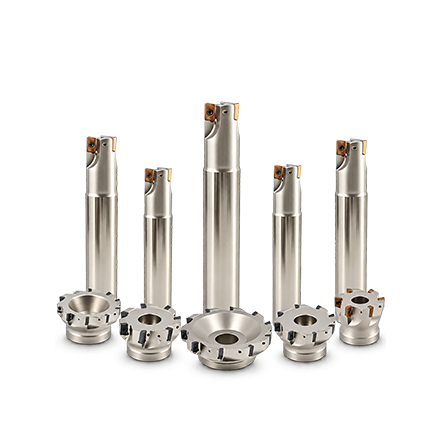
Milling Cutters
Milling cutters remove material as rotating edges engage a workpiece to produce slots, pockets, shoulders and machined faces. Network Industrial handles global enquiries for industrial milling cutters used on CNC machining centres, toolroom equipment and production machines. Selecting the correct cutter begins with the feature being machined, the workpiece material and the machine’s available spindle interface.
Nominal cutter diameter alone does not determine performance. The number of cutting edges, holder runout, length of tool engagement and chip evacuation can change the required setup.
Description
Description
Industrial Applications
End milling is used for pockets, profiles, keyways and shoulders. Face milling is commonly selected for machining broad flat surfaces, while slab milling removes material along a wide plane using a peripheral cutter on an appropriate arbor. Each method puts different forces into the machine and fixture.
Workpieces with thin walls, deep cavities or long-reach features can vibrate when the tool is insufficiently rigid. A large cutter head also needs adequate spindle power and a suitable workholding arrangement. Matching the cutter to the task helps prevent excessive wear and poor surface finish.
Types and Configuration
End mills may be solid carbide, high-speed steel or indexable tools. Square-end, ball-nose and corner-radius configurations serve different contours and finishing needs. Flute count, helix and cutting length influence chip space and tool strength. Some cutters are better suited to slotting, others to side milling or finishing.
Face mills use multiple edges, frequently replaceable inserts, over a larger cutter diameter. Cutter pitch, entering angle and insert grade must suit the material and operation. Slab mills use peripheral teeth along a cylindrical body and are typically mounted on an arbor. These are distinct configurations rather than small variations of an end mill.
Technical Specifications
Record cutting diameter, number of teeth, flute or insert geometry, overall length, shank or arbor dimensions and mounting interface. For indexable cutters, identify the head and insert codes separately. An insert must fit the pocket and clamping system exactly, not merely share the cutting-edge shape.
Spindle speed, available power, feed per tooth, radial engagement and depth of cut influence cutting conditions. Excessive runout can overload one edge, while extended tool overhang promotes chatter. Cutter manufacturers provide material-specific cutting data that should be adjusted to the machine’s rigidity.
Tool material and coating should be selected for the workpiece. Aluminium often benefits from sharp edges and good chip clearance; steels and heat-resistant materials may need different wear-resistance and thermal characteristics. Coolant arrangements also depend on the specific cutting process.
A face mill may require an arbor, pull stud, retaining bolt or drive keys that are not included with the cutter body. Identify these accessories in the purchasing schedule. For end mills, confirm the collet or hydraulic holder dimensions and the permitted clamping length.
Where milling performance deteriorates, inspect the toolholder, spindle runout, workholding and individual cutting edges. New inserts cannot correct a loose fixture or a damaged cutter pocket. Record roughing and finishing tools separately when their cutting geometry differs.
Why Source from Network Industrial?
Network Industrial supports worldwide enquiries for end mills, face mills, slab mills and related inserts. Buyers can specify dimensions, existing part numbers and quantities for a supply quotation. Availability and compatibility are confirmed for each quoted product and mounting arrangement.
Request a Quotation
Send the operation, machine spindle, workpiece material, cutter dimensions, holder or arbor reference and quantities. State whether the requirement covers a complete cutter or replacement inserts.
FAQs
Can one end mill replace every face-milling cutter?
No. Both may machine flat surfaces, but engagement, size and machine requirements differ.
Are face-mill inserts universally compatible?
No. Pocket geometry and clamping hardware must match the specific cutter.
Why does a long end mill tend to chatter?
Added overhang reduces rigidity and can increase cutting vibration.
Delivery Info
- Standard and Express delivery services are available for all items.
- Shipping costs are calculated at the checkout page (after delivery option & destination confirmation).
- Tracking is available for all delivery options.
- Items are delivered during standard business hours.


Reviews
There are no reviews yet.