


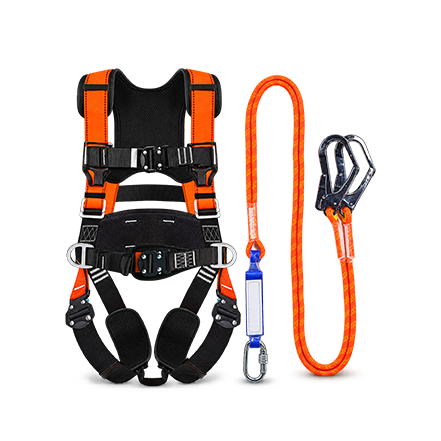
Fall Protection Equipment
Fall protection equipment is selected to prevent falls or arrest them within an appropriately designed system when elevated work presents exposure. Network Industrial handles worldwide sourcing enquiries for harnesses, safety lanyards, lifelines and anchor points used in industrial maintenance and construction. Each component has a distinct function; a harness alone does not form a safe fall-arrest system.
The work location, potential fall path, available clearance and rescue arrangements should be established before choosing equipment. Compatibility of connectors and supporting structures matters as much as any individual product rating.
Description
Description
Industrial Applications
Roof maintenance, machinery servicing, platform access and structural installation may require fall protection after other controls are assessed. Workers moving along an edge have different needs from workers at a fixed position. Restraint prevents access to the hazard, while fall arrest is designed to stop a fall that occurs.
Sharp structural edges, obstacles below a worker and possible swing falls affect the permitted arrangement. The site needs trained users, inspection procedures and a practical rescue plan. Equipment approved for one location may not be suitable for another.
Types and Configuration
Safety harnesses support the body through approved straps. Their attachment points have defined functions, such as fall arrest or positioning; not every ring is equivalent. Lanyards connect a harness to the approved system. Energy-absorbing fall-arrest models differ from restraint and positioning devices, while hooks must be compatible with their anchorages.
Lifelines provide a connection path through approved vertical, horizontal or self-retracting arrangements. Horizontal lines can deflect and increase the necessary fall clearance. Anchor points attach the system to a structure; a rated device does not establish that the supporting roof, beam or fixings are adequate.
Technical Specifications
Specify complete model codes, relevant approvals, permitted user weight, connection types and the designed system. Assess free-fall distance, absorber extension, anchorage height and swing hazards. A shorter lanyard does not automatically solve a clearance problem.
Horizontal lifelines and permanent anchors can require qualified structural engineering. Components from different brands should not be assumed interchangeable merely because connectors fit. Use manufacturer compatibility information and the standards that apply to the destination country.
Inspect harness stitching and straps, lanyard connectors, lifeline materials and anchor components. Cuts, corrosion, damaged gates or evidence of fall loading need action under applicable procedures. Rescue plans must cover the possible location of the worker after arrest.
The specification should identify whether the project requires loose replacement components or a newly engineered installation. Supplying a cable or connector is different from designing the structure that supports it. Drawings, line spans and the number of simultaneous users help establish the scope. Installation, testing and local certification should be identified separately when relevant.
If a horizontal line is involved, system deflection may differ by position along the span. Workers should not assume that clearance measured at one point is sufficient everywhere. Edge-use limitations, approved hook connections and retrieval access need site assessment. An alternative model must be checked within the entire assembled system, not assessed as a standalone product.
Why Source from Network Industrial?
Network Industrial supports global enquiries for specified fall protection components using approved equipment schedules and drawings. Buyers can identify complete systems or replacement parts, with technical compatibility and product documents confirmed for each quoted item.
Request a Quotation
Provide the approved system reference, intended work-at-height task, harness sizes, related components, quantities and delivery location. Include drawings and original product codes when replacing lifelines, connectors or anchors.
FAQs
Can a harness be used without an approved anchorage?
No. A complete, compatible system and suitable supporting structure are required.
Are lifelines, lanyards and anchors interchangeable?
No. Each performs a different function, and the full arrangement needs an appropriate compatibility check.
Does fall-arrest equipment remove the need for rescue planning?
No. The worksite needs arrangements for prompt rescue after a fall.
Delivery Info
- Standard and Express delivery services are available for all items.
- Shipping costs are calculated at the checkout page (after delivery option & destination confirmation).
- Tracking is available for all delivery options.
- Items are delivered during standard business hours.


Reviews
There are no reviews yet.