


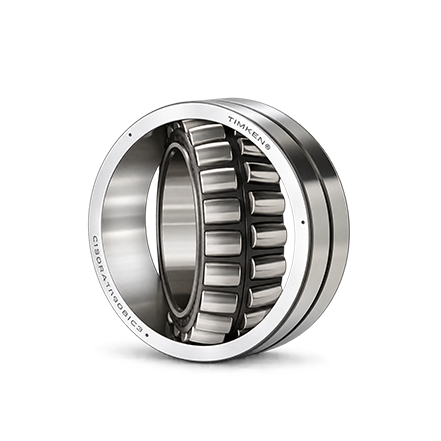
Spherical Bearings
Spherical bearings are used where a machine support must allow angular movement or limited misalignment. In rotating machinery, spherical roller bearings have two rows of rollers running against a common spherical outer raceway. Network Industrial supplies industrial spherical bearing requirements globally for maintenance, equipment repair and new projects.
The term also refers to spherical plain bearings used in pivoting joints, but those employ sliding contact rather than rollers. They are separate product technologies. A supply enquiry should identify whether the application involves a continuously rotating shaft, a limited oscillating movement or an articulating connection.
Description
Description
Industrial Applications
Spherical roller bearings are used in heavy conveyor drives, crushers, large fans, vibrating machinery and other applications where substantial loads combine with limited shaft deflection or housing misalignment. Their self-aligning geometry can accommodate specified angular changes, but cannot correct serious machine damage or unlimited misalignment.
Spherical plain bearings are used in joints and linkages where parts pivot relative to one another. Sliding contact produces different lubrication and wear considerations from rolling support. Photographs and machine details help procurement teams distinguish the two families when the original product description uses only the word spherical.
Types and Configuration
Double-row spherical roller bearings are a common rolling design. Their internal geometry, cage construction, clearance designation, bore and lubrication features vary by series. Cylindrical-bore versions mount differently from tapered-bore types, which may use adapter or withdrawal sleeves and associated locking components.
Spherical roller thrust bearings form another distinct category designed mainly for axial loads. Spherical plain bearings use mating curved sliding surfaces rather than rolling elements. Each needs its own load and operating data. These constructions should not be grouped as interchangeable parts under a general spherical bearing label.
Technical Specifications
Provide the complete product code, bore, outside diameter, width and bore configuration. For spherical roller bearings, confirm radial and axial loads, shaft speed, working temperature, internal clearance, lubricant and any vibration requirement. Permissible misalignment depends on the specific model and its operating conditions.
Tapered-bore spherical roller bearings require controlled mounting. Driving the inner ring farther along a taper changes its expansion and reduces internal clearance. Incorrect drive-up may leave excessive interference or insufficient clamping. Follow the manufacturer’s specified method and record any required sleeve, nut or retaining component.
A bearing used in vibrating equipment may need particular cage or clearance features. Contamination protection, housing stiffness and grease access also affect operation. A general-purpose spherical roller series should not automatically replace a specified vibrating-machinery bearing because the main dimensions match.
When reviewing a failed unit, inspect raceways, shaft seats and seals for contamination, fatigue marks and signs of incorrect mounting. Record whether the original bearing was cylindrical- or tapered-bore. Replacement selection must preserve the intended shaft support and mounting arrangement.
Why Source from Network Industrial?
Network Industrial accepts international sourcing enquiries for spherical roller bearings and clearly identified spherical plain bearing requirements. Original part numbers, assembly drawings and quantities give procurement teams a useful quotation basis. Proposed alternatives need technical review of bore type, clearance, load ratings and operating limits.
Product brand, origin, technical documentation and availability must be confirmed against the specific offered item. A general bearing family name does not establish interchangeability.
Request a Quotation
Send the complete bearing number, dimensions, quantity, machine application and delivery destination. Identify bore type, mounting hardware, speed, loads, lubricant and whether the required unit is a spherical roller or spherical plain bearing.
FAQs
Are spherical roller and spherical plain bearings the same?
No. Roller bearings support rotation through rolling elements; plain bearings use sliding spherical surfaces, often in joints.
Can spherical roller bearings correct major misalignment?
They accommodate limited angular misalignment within the manufacturer’s stated limits, not unlimited shaft or housing errors.
Why does mounting change internal clearance?
Driving a tapered-bore inner ring onto its seat expands it and reduces the bearing’s internal clearance.
Delivery Info
- Standard and Express delivery services are available for all items.
- Shipping costs are calculated at the checkout page (after delivery option & destination confirmation).
- Tracking is available for all delivery options.
- Items are delivered during standard business hours.

Reviews
There are no reviews yet.