


Industrial Bearings
Industrial bearing replacements must match the shaft arrangement, load direction and operating duty, not simply the bore size. Network Industrial supplies industrial bearing requirements globally for plant maintenance, equipment repair and new industrial projects. The manufacturer’s full bearing reference remains useful, but operating conditions are essential when assessing a replacement.
Two bearings can share the same bore, outside diameter and width without being equivalent. Their seals, internal clearance, cage, load ratings and allowable speed may differ. Identifying the shaft position and the operating duty helps avoid purchasing a bearing that physically fits but performs a different function.
Description
Description
Industrial Applications
Industrial bearings are used in electric motors, pumps, gearboxes, compressors, conveyors and production machinery. A motor drive-end bearing can have a different duty from the bearing at its opposite end. Pump assemblies may generate axial hydraulic thrust, while material-handling equipment can expose bearing supports to dust, vibration and intermittent loads.
When a bearing fails repeatedly, inspect the surrounding assembly rather than automatically choosing a heavier replacement. Insufficient lubrication, contaminated grease, housing distortion, incorrect fits and shaft misalignment can damage a correctly specified bearing. Photographs of the removed part and notes about the failure help clarify a maintenance purchasing request.
Types and Configuration
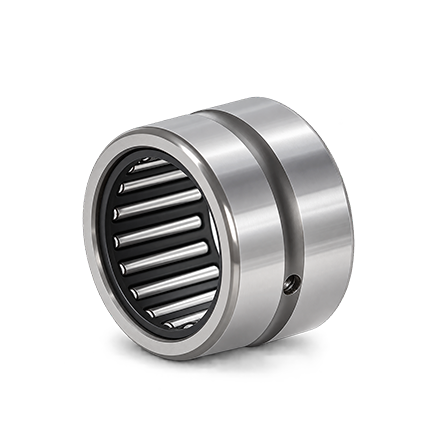
Ball bearings suit many relatively high-speed applications under appropriate load conditions. Roller bearings are often chosen for larger radial loads. Tapered roller bearings support combined radial and axial forces, while needle roller bearings provide compact radial support when space around the shaft is limited.
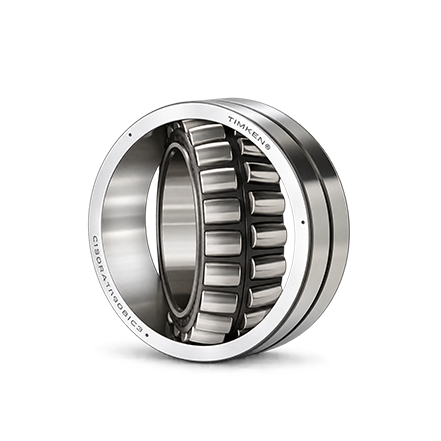
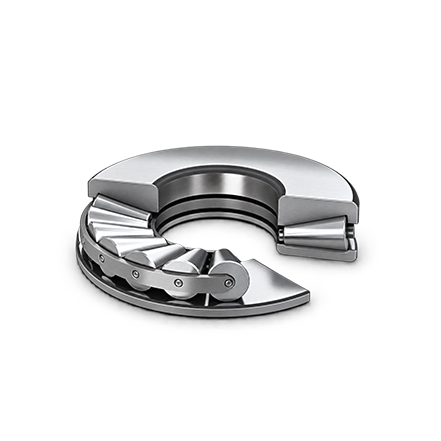
Thrust bearings carry forces along the shaft axis. Spherical roller bearings can accommodate limited angular misalignment while handling substantial loads. These are different constructions, each with a distinct mounting arrangement and operating limit. A similar outside diameter does not make one family interchangeable with another.
Technical Specifications
For replacements, record the complete bearing designation, including suffixes, plus bore, outside diameter and width. Suffixes can indicate clearance, cage, seals or accuracy depending on the manufacturer. Always interpret them using the relevant manufacturer’s designation system; an abbreviated part number may omit a critical requirement.
For new selection, specify radial and axial loading, maximum shaft speed, duty cycle, ambient and operating temperatures, and required service life. Dynamic and static load ratings describe different conditions. A life calculation should use the loading and lubrication assumptions suitable for the machine, not a general family-level estimate.
Shaft and housing fits, lubrication access, sealing and thermal expansion also affect the result. One support may locate the shaft axially while another permits movement as temperature changes. Substituting a locating bearing at a floating support can generate unwanted forces, even when its load rating appears adequate.
A bearing schedule should identify each machine position and required quantity separately. Record whether the enquiry includes a mounted housing, seals, sleeves or retaining hardware. Bearings sold as individual components should not be assumed to include these neighbouring items without a clear quotation.
Why Source from Network Industrial?
Network Industrial handles worldwide supply enquiries for industrial bearings based on original product references, technical drawings or equipment schedules. This gives procurement and maintenance teams a clear starting point for a multi-item quotation. Where an alternative is requested, its dimensions, design and operating limits must be reviewed against the intended application.
Brand, product origin, availability and documentation should be confirmed for each quoted item. A generic bearing category does not establish the stock status or technical compatibility of a particular model.
Request a Quotation
Send the bearing designation, measured dimensions, quantity and delivery destination. Include the machine application, speed, load direction, lubrication conditions and photographs of readable markings. If an exact part number is unavailable, state which measurements are confirmed and which details still need verification.
FAQs
Are bearings with matching dimensions interchangeable?
Not automatically. Check the bearing family, internal clearance, seals, cage, load ratings and speed restrictions before accepting a substitute.
What is the difference between radial and axial loading?
Radial forces act across the shaft; axial forces act along it. Each bearing design supports these directions differently.
How can I identify a bearing with an unreadable number?
Provide precise measurements, photographs and equipment details. These can narrow the possibilities but do not prove technical equivalence.
Delivery Info
- Standard and Express delivery services are available for all items.
- Shipping costs are calculated at the checkout page (after delivery option & destination confirmation).
- Tracking is available for all delivery options.
- Items are delivered during standard business hours.
Reviews
There are no reviews yet.