


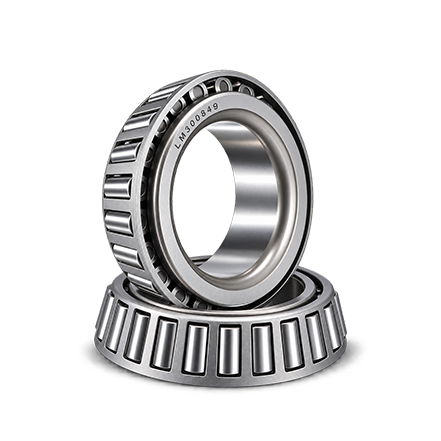
Tapered Roller Bearings
Tapered roller bearings use conical rollers and matching raceways to transmit radial and axial forces through angled contact. Their geometry makes them suitable for shafts subject to combined loading and controlled axial positioning. Network Industrial supplies industrial tapered roller bearing requirements globally for equipment repair, plant maintenance and project procurement.
For a replacement, the assembly arrangement matters as much as the individual bearing dimensions. Matching the cup’s outside diameter or cone’s bore does not confirm compatible raceway geometry, preload or endplay. The original product references and installation method should accompany any request for an alternative.
Description
Description
Industrial Applications
Tapered roller bearings are used in industrial gearboxes, transmissions, construction machinery and heavy rotating assemblies. Helical gears can generate axial thrust as well as radial forces, requiring a bearing arrangement capable of reacting to both. In some systems, opposing bearings establish the shaft’s axial position and maintain gear alignment.
A worn tapered bearing may show damage from contaminated lubricant, poor sealing or an unsuitable adjustment. During repairs, inspect the shaft seats, housing shoulders, spacers and retaining components. A correctly supplied bearing can fail again if its mounting surfaces or lubricant supply remain unsuitable.
Types and Configuration
Single-row tapered roller bearings carry substantial thrust mainly in one direction and are commonly arranged in opposed pairs. Double-row types can carry axial forces acting in both directions within their design limits. Four-row configurations are used in selected heavily loaded industrial machinery with specific mounting requirements.
Many single-row tapered bearings consist of separable cups and cones. Matched bearing sets and preset spacer assemblies also exist. Components that appear similar should only be combined when the manufacturer documents interchangeability. State whether a supply enquiry covers the complete set or a separately identified cup or cone.
Technical Specifications
Provide cup and cone codes, bore, outside diameter, total assembly width and required quantity. The specified cup-and-cone pairing and shaft location are particularly important when the machinery uses spacer adjustment. If the original reference is missing, include a dimensioned assembly drawing rather than relying on a single measurement.
A tapered bearing exposed to radial loading develops an internal thrust reaction. The opposing bearing and shaft arrangement must account for it. For combined loads, review the relevant manufacturer’s load calculation and dynamic and static ratings. A bearing selected solely by radial capacity can be unsuitable for the total duty.
Endplay and preload must follow the machine’s design. Excessive preload can raise friction and temperature, while excessive endplay may allow unwanted shaft or gear movement. Operating speed, lubrication, fit tolerances and thermal growth affect the final setting, so do not copy an adjustment from unrelated equipment.
Confirm cage design, seals and the manufacturer’s installation procedure before purchasing an alternative. Record whether cups and cones are supplied in matched sets and whether the mounting depends on original spacers. A physical dimensional match does not guarantee the same contact conditions once assembled.
Why Source from Network Industrial?
Network Industrial supports worldwide tapered roller bearing enquiries for specified industrial equipment and maintenance schedules. Procurement teams can send complete bearing codes, assembly drawings and quantities to establish a clear quotation requirement. Any proposed substitute must be reviewed for load capacity, geometry, adjustment and operating conditions.
Availability, brand, product origin and documentation should be confirmed against the quoted bearing or matched assembly. A category listing does not establish that all cups and cones are interchangeable or stocked.
Request a Quotation
Send cup and cone numbers, quantity, machine application, shaft position, operating speed and expected radial and axial loads. Include the assembly drawing and any required endplay, preload or spacer information when requesting an alternative.
FAQs
Why are single-row tapered bearings often installed in pairs?
One bearing mainly resists thrust in one direction; an opposing arrangement supports thrust acting the other way and helps locate the shaft.
Can I mix cups and cones from different bearing codes?
Only if the manufacturer expressly confirms compatibility. Similar dimensions do not establish suitable contact geometry.
Is zero endplay correct for every tapered bearing?
No. The required setting depends on bearing design, equipment duty and mounting instructions.
Delivery Info
- Standard and Express delivery services are available for all items.
- Shipping costs are calculated at the checkout page (after delivery option & destination confirmation).
- Tracking is available for all delivery options.
- Items are delivered during standard business hours.
Reviews
There are no reviews yet.