


Boring Tools
Boring tools enlarge or finish existing holes to a controlled internal diameter and surface condition. Network Industrial supports worldwide sourcing enquiries for boring tools used in machining centres, lathes and industrial repair workshops. Unlike drilling, boring begins with a previously formed opening, often to improve its final size, position or finish.
The intended bore diameter, tool reach and machine stability decide which system is suitable. A long boring bar that fits inside the part can still vibrate or deflect if it lacks sufficient rigidity.
Description
Description
Industrial Applications
Boring is used for bearing seats, hydraulic parts, machinery housings and aligned internal features. Rough boring removes an allowance remaining after drilling or casting, whereas finishing aims for a tighter final diameter and better surface finish. Interrupted bores and cross holes can load the cutting edge unevenly.
Smaller holes may use single-point tools on a lathe, while large housings can require adjustable boring heads on machining centres. Fixture alignment, spindle runout and measurement procedure affect achievable accuracy. Cutting-tool specification must be considered alongside the workholding setup.
Types and Configuration
Single-point boring bars carry an internal cutting edge using solid-tool, brazed or indexable-insert construction. Steel and carbide bars have different stiffness and usable reach. Long-overhang applications can use purpose-designed damped bars where the selected machine and operating range permit them.
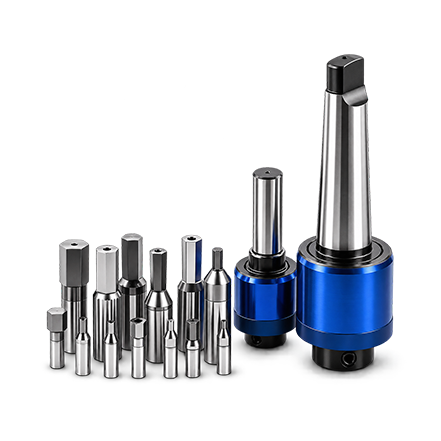
Adjustable boring heads allow controlled diameter settings. Rough-boring heads may use several edges for larger cuts, while fine-boring heads provide more precise adjustment. Back-boring tools suit specified shoulders that cannot be reached conventionally. The head and bar connection must match the spindle interface.
Technical Specifications
State starting and target diameter, bore depth, stock allowance, tolerance and surface finish. The boring bar must fit the smallest passage while allowing chip clearance. Increased overhang can produce chatter, poor finish and dimensional error. A larger bar within the access limit can improve stiffness in many cases.
Insert geometry, grade and nose radius influence cutting force and finish. Slender bars may need restrained depths of cut and appropriately sharp edges. Select cutting data for the workpiece material and the actual rigidity of the setup, not a nominal bore diameter alone.
Specify bar shank, holder interface, overall reach, coolant arrangement and the head or insert part number. A through-coolant system needs compatible connections. The tool’s adjustment range does not guarantee that a machine can achieve the final tolerance without calibration and stable fixturing.
Identify whether the purchasing requirement is for a complete boring head, individual bar, cutting insert, adjustment cartridge or clamping components. A worn head or damaged seat can prevent accuracy even when a fresh insert is installed.
For internal shoulders and deep housings, provide a section drawing with clearance restrictions. It allows the supplier to verify that the cutting edge can reach the machining surface without the holder touching nearby features.
If boring repeatedly produces taper or chatter, inspect workholding, tool length, insert loading and alignment. A higher-performance insert alone will not solve a machine-setup fault. Where tolerances are demanding, identify the measurement method and process sequence before selecting the tool.
Why Source from Network Industrial?
Network Industrial supports international enquiries for boring bars, adjustable heads and associated tooling based on exact references and part drawings. Buyers can send required dimensions and quantities for quotation. Compatibility and product availability must be checked for each proposed item.
Request a Quotation
Send the machine interface, original tool code, initial and final bore sizes, depth, workpiece material, tolerance and quantity. Include any drawings showing internal shoulders or restricted access.
FAQs
How does boring differ from drilling?
Drilling creates a hole, while boring enlarges or finishes an existing opening.
Will a longer boring bar work with the same cutting settings?
Not necessarily. More overhang can reduce rigidity and change permissible cutting conditions.
Does a fine-boring head guarantee a precision bore?
No. Stable workholding, alignment, adjustment and measurement are also required.
Delivery Info
- Standard and Express delivery services are available for all items.
- Shipping costs are calculated at the checkout page (after delivery option & destination confirmation).
- Tracking is available for all delivery options.
- Items are delivered during standard business hours.
Reviews
There are no reviews yet.