


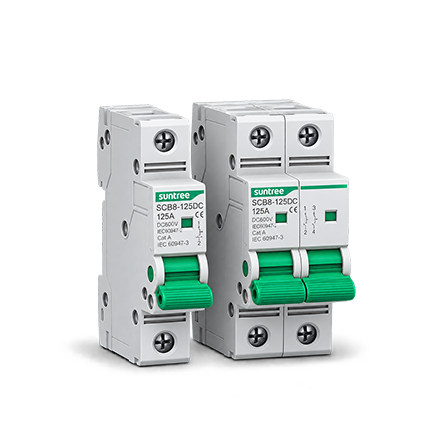
Industrial Circuit Breakers & Fuses
Network Industrial supplies circuit breakers and fuses globally for industrial electrical installations, machinery and control equipment. Our supply enquiries support replacement purchases and project requirements where protective devices must match the circuit they serve.
Circuit breakers and fuses interrupt current under specified fault or overload conditions. Their protective behaviour depends on the device design, rating and coordination with the installation. Choosing the correct product involves more than matching the current printed on the front.
For industrial buyers, the original reference, system voltage and required interrupting capability provide a useful starting point. These details help distinguish components that may look similar but respond differently during a fault.
Description
Description
Industrial Applications
Circuit protection is used in distribution assemblies, machine electrical systems and control circuits. Its purpose is to limit the effects of specified overcurrent conditions on the protected circuit and equipment.
Different loads create different operating demands. Starting equipment can draw more current than it uses during normal running. The protective device needs to accommodate the intended operating behaviour while providing the protection required by the circuit design.
Replacement enquiries should also account for the surrounding assembly. Physical dimensions, connections and compatibility with existing accessories affect whether a proposed item can serve the original function. A change in protection characteristics can affect other devices upstream or downstream.
Protection Characteristics and Configuration
A circuit breaker can generally be reset after operation, once the fault has been addressed and the device is suitable for continued service. A conventional fuse operates by melting its element and requires replacement after it clears a fault.
Within this product group, configuration includes poles, mounting, connections and the specified trip or time-current behaviour. These characteristics remain part of the individual device requirement.
The complete protection arrangement may perform several functions. Overcurrent protection should not be assumed to include residual-current protection, isolation or every form of equipment protection unless the selected product is expressly rated for those functions.
Technical Specifications
Ratings must be read against the selected model, operating voltage and applicable product standard.
| Parameter | Specification detail |
| Rated current | Required continuous current under the stated operating conditions. |
| System voltage | Operational voltage, frequency and AC or DC circuit. |
| Interrupting capability | Required breaking capacity at the applicable system voltage. |
| Operating characteristic | Trip curve, time-current response or specified fuse characteristic. |
| Pole arrangement | Required poles and treatment of the circuit conductors. |
| Mechanical fit | Dimensions, fixing arrangement and connection interfaces. |
| Coordination | Compatibility with the protected circuit and associated devices. |
| Identification | Full part reference, markings and required product documentation. |
Current rating and breaking capacity describe different things. Current rating relates to normal operation; breaking capacity concerns interruption of fault current under specified conditions. A higher current rating does not necessarily provide greater fault-interruption capability.
Similarly, AC and DC applications cannot be treated as interchangeable without the relevant rating. For replacement work, the original protection specification should remain the basis of the purchase, with any proposed change assessed by the responsible electrical designer.
Why Source from Network Industrial?
Network Industrial supplies circuit protection alongside the cables, switches and control components used in industrial installations. Buyers can organise related requirements through one supplier contact, with each protective device linked to its equipment or panel reference.
An enquiry can cover a single maintenance replacement or an itemised project schedule. Full product codes and electrical details give the quotation a defined scope and help prevent substitutions based only on physical appearance or nominal current.
Request a Quotation
Send the original part number, rated current, system voltage, breaking capacity and quantity. Include device markings, dimensions and relevant panel documentation where available.
FAQs
Are fuses with the same current rating interchangeable?
No. Voltage, breaking capacity, operating characteristic, dimensions and application requirements may differ. The complete fuse specification determines suitability.
Can a higher-rated breaker stop unwanted tripping?
Increasing the rating can compromise circuit protection. The cause of tripping and the circuit design need assessment before changing the specified device.
Does a circuit breaker provide every electrical protection function?
No. Its functions depend on the selected design and ratings. Additional protection may be required elsewhere in the installation.
Delivery Info
- Standard and Express delivery services are available for all items.
- Shipping costs are calculated at the checkout page (after delivery option & destination confirmation).
- Tracking is available for all delivery options.
- Items are delivered during standard business hours.

Reviews
There are no reviews yet.