


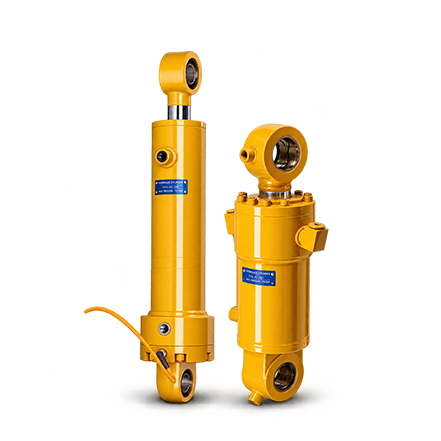
Hydraulic Cylinders (Actuators)
Network Industrial supplies hydraulic cylinders globally, supporting machinery builders and maintenance teams with actuator enquiries for lifting, clamping, positioning and material handling. A hydraulic cylinder converts hydraulic energy into linear force and movement to lift, push, pull, clamp or position a load.
The cylinder must fit the machine mechanically and deliver the required force through the intended travel. Bore, rod diameter, stroke and mounting geometry establish the main product dimensions, while working pressure and fluid conditions define the operating requirement. Enquiries can cover a specified replacement or a cylinder requirement supported by a machine drawing.
For equipment buyers, a cylinder’s capacity is meaningful only in relation to the application. The direction of loading, travel speed and space available around the moving assembly all influence the appropriate specification.
Description
Description
Industrial Applications
Hydraulic cylinders are used in presses, production fixtures and clamping equipment where fluid power provides controlled force. In material-handling machinery, they move lifting mechanisms, tilt assemblies and position loads through a defined stroke.
Mobile equipment uses cylinders to operate attachments and machine structures. The mounting arrangement must transfer the load while allowing the required movement. Industrial machines may also need cushioning or position feedback where the actuator forms part of a controlled production sequence.
Applications with long strokes require attention to the rod and mounting arrangement, particularly when the cylinder pushes against a load. The specified cylinder should suit the force path through the machine rather than simply provide sufficient theoretical force at the piston.
Cylinder Configuration
The cylinder requirement brings together its powered movement, end connections and mounting style. The original machine drawing identifies how the cylinder acts on the load and how fluid enters and leaves the working chambers.
Additional configuration details can include cushioning and position feedback where required by the equipment. These characteristics belong within the cylinder specification. They should be described alongside the bore and stroke so the proposed component matches the intended machine function.
Technical Specifications
Cylinder dimensions and ratings are model-specific. The following details define the technical requirement for a supply enquiry.
| Parameter | Specification detail |
|---|---|
| Bore and rod diameter | Dimensions relevant to force, displacement and rod loading. |
| Stroke | Required linear travel and permitted end positions. |
| Operating pressure | Working pressure and the cylinder’s approved limits. |
| Mounting | Fixing style, pin sizes, centres and rod-end interface. |
| Overall dimensions | Retracted and extended lengths with connection details. |
| Fluid and seals | Compatibility with hydraulic fluid and operating temperature. |
| Motion duty | Load direction, travel speed and cycle frequency. |
| Machine interfaces | Port locations, cushioning and feedback where specified. |
Force depends on pressure and effective piston area. On a conventional single-rod cylinder, the rod reduces the working area on one side, so extension and retraction force differ. Actual usable force also reflects friction and circuit conditions. Stroke and overall length are separate dimensions, both relevant to fitting the cylinder into the machine.
Why Source from Network Industrial?
Network Industrial supplies cylinders within a broader hydraulic component range. This allows procurement teams to include the actuator alongside related valves, hoses, fittings and filtration requirements in the same supply enquiry.
For replacement purchases, the original reference and installation drawing help establish the required component. For new machinery, a defined load and movement specification gives the purchase a clear technical basis. Your enquiry can include individual cylinders or an itemised list for several machines.
FAQs
Does the same bore and stroke guarantee a direct replacement?
No. Overall length, mounting geometry, ports, rod ends and operating limits may differ between cylinders with the same nominal dimensions.
Why is rod diameter relevant?
It affects the working area on the rod side and the rod’s ability to withstand the application load. Long pushing strokes require particular attention.
Can a cylinder be specified from photographs alone?
Photographs help identify the arrangement, but accurate dimensions and operating information are normally needed where the original model code is unavailable.
Request a Quotation
Send the cylinder code or drawing, bore, rod diameter, stroke, pressure and quantity. Include mounting dimensions and the equipment application for a supply quotation.
Delivery Info
- Standard and Express delivery services are available for all items.
- Shipping costs are calculated at the checkout page (after delivery option & destination confirmation).
- Tracking is available for all delivery options.
- Items are delivered during standard business hours.
Reviews
There are no reviews yet.