


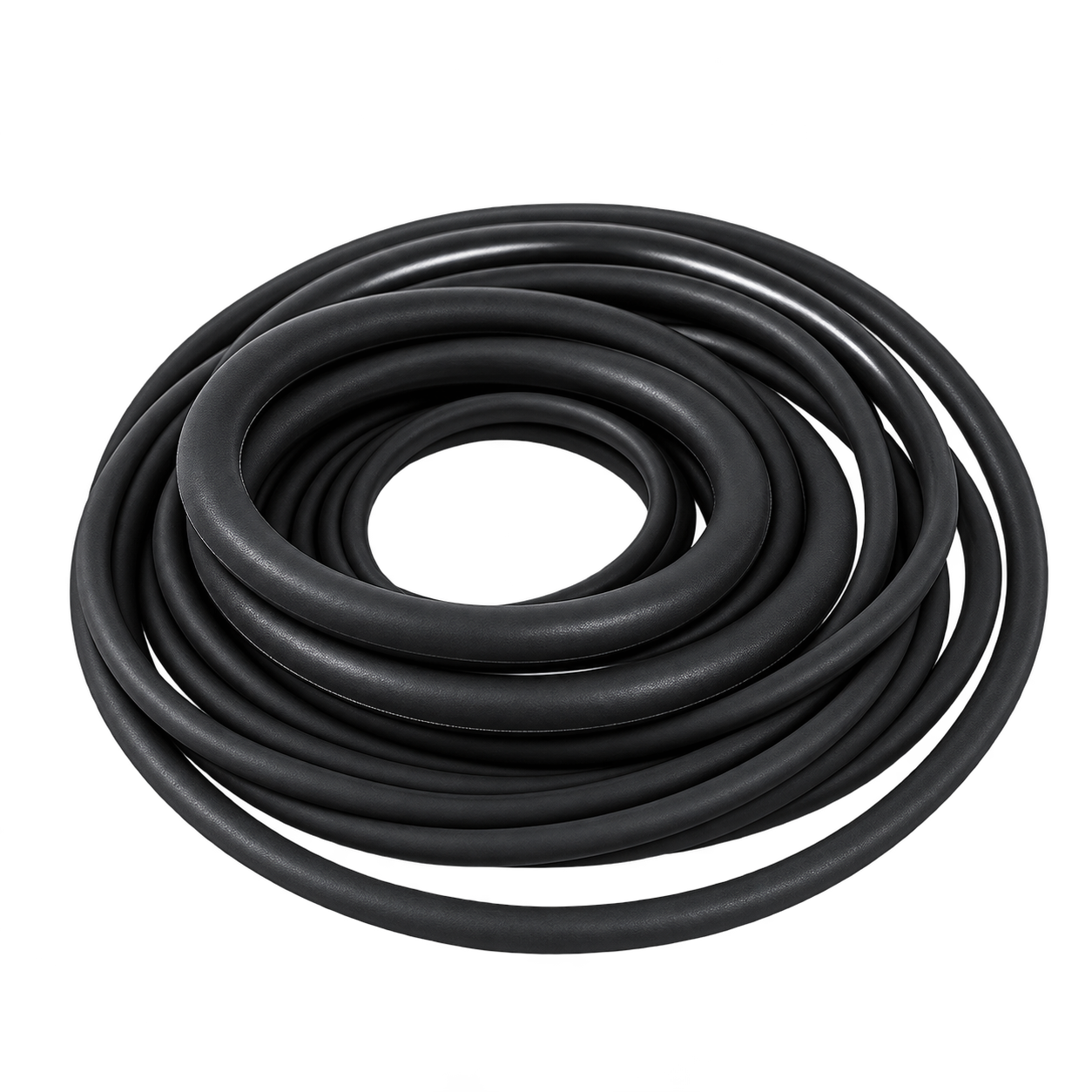
Round Belts
Network Industrial supplies industrial round belts for light-duty power transmission and product handling in the UAE. Their circular profile is commonly used in roller conveyor drives, packaging machinery, and transfer systems requiring a flexible belt path.
Description
Description
Flexible Belting for Light-Duty Applications
Round belts run in compatible pulley grooves to transfer motion or move products. Their profile can accommodate conveying arrangements where a broad belt surface is unnecessary.
Polyurethane round belts are widely used for their flexibility and range of surface properties. Performance depends on the selected material, diameter, reinforcement, and installation conditions.
Round Belt Selection
Belt Diameter
Diameter affects pulley fit, bending behavior, and load capacity. It should match the equipment specification and pulley arrangement.
Hardness and Surface Finish
Hardness and surface texture influence flexibility, grip, and wear. A harder belt is not automatically the better choice.
Reinforcement
Unreinforced belts can suit flexible, light-duty applications. Reinforced constructions can limit elongation where the design requires greater dimensional stability.
Joining Method
Some thermoplastic round belts can be welded into a continuous loop. Joining procedures depend on the material and reinforcement, and the joint must be suitable for the working load.
Typical Applications
- Roller conveyors: Driving rollers in compatible handling systems.
- Packaging equipment: Transferring and guiding lightweight products.
- Printing and paper handling: Movement through feeding and finishing equipment.
- Product transfer systems: Flexible routing across suitable conveying layouts.
Check the Working Conditions
Specify the operating load, speed, pulley diameters, and exposure to moisture, oil, or cleaning chemicals. For elastic belts, installation stretch must follow the belt manufacturer’s guidance.
Color alone is not a reliable way to identify a replacement. Belts of the same color may have different hardness, material, or reinforcement.
Details to Include in Your Inquiry
- Existing belt reference.
- Diameter and required length.
- Material, hardness, and surface finish, if known.
- Reinforced or unreinforced construction.
- Pulley diameters and routing.
- Working load and operating speed.
- Joining requirements and environmental exposure.
Frequently Asked Questions
Can a round belt replace a V-belt?
Only if the equipment is designed for that round belt. Pulley compatibility and transmission requirements must be checked before changing the belt profile.
Can all round belts be welded?
No. Weldability depends on the material and construction. Reinforced belts may require a specific joining process.
Are polyurethane round belts suitable for food contact?
Only grades with the appropriate documentation for the intended use should be selected. Polyurethane construction alone does not confirm food-contact suitability.
Request a Round Belt Quote
Send Network Industrial the belt diameter, length, and application details. Include photographs of the existing belt and pulley layout when the specification is unavailable.
Delivery Info
- Standard and Express delivery services are available for all items.
- Shipping costs are calculated at the checkout page (after delivery option & destination confirmation).
- Tracking is available for all delivery options.
- Items are delivered during standard business hours.
Reviews
There are no reviews yet.