


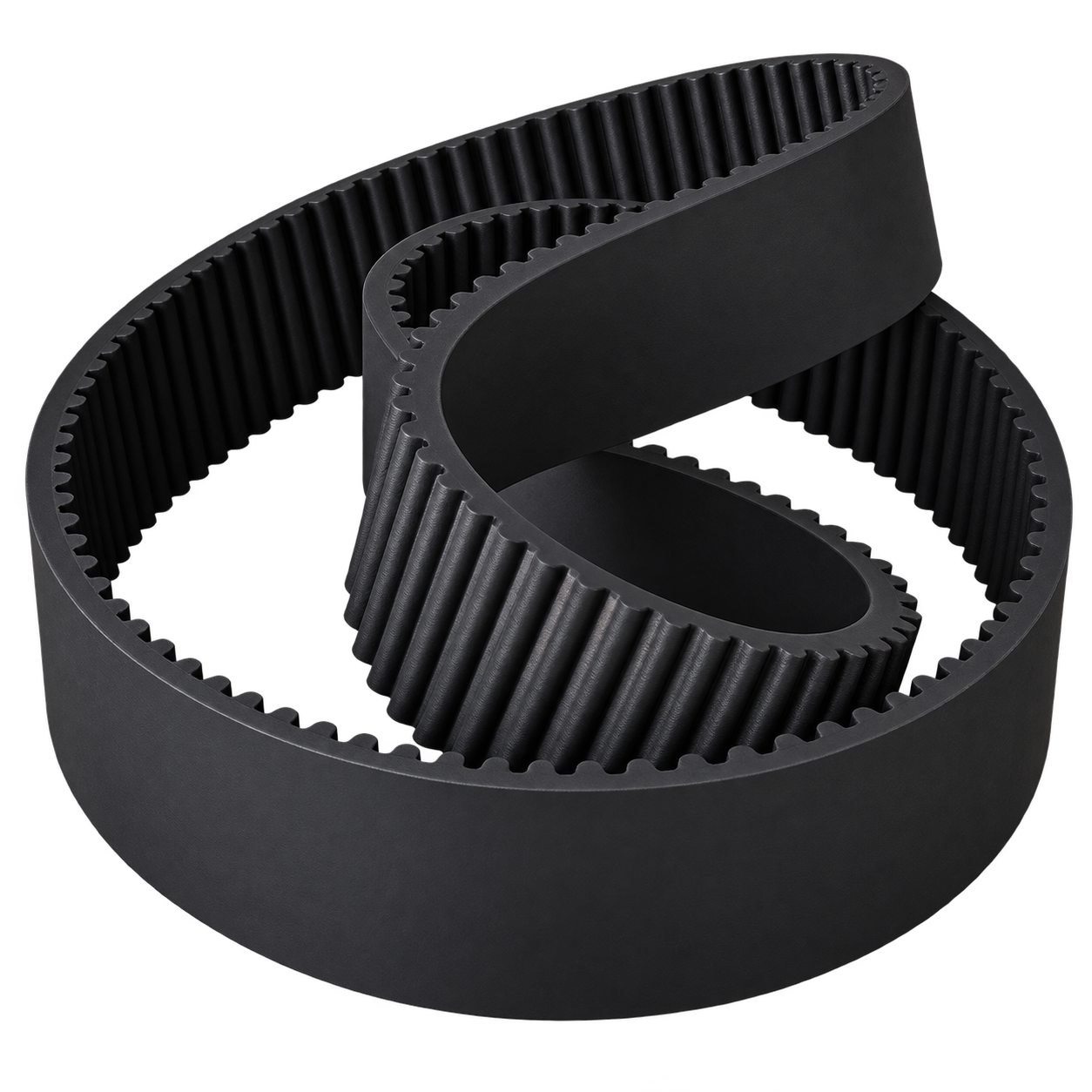
Timing Belts
Network Industrial supplies industrial timing belts for synchronized drives, automation equipment, and machinery maintenance in the UAE. Also called synchronous belts, timing belts engage with toothed pulleys to coordinate shaft rotation or linear movement.
Description
Description
Controlled Movement Through Tooth Engagement
Timing belts transmit force through engagement between the belt teeth and pulley grooves. This maintains the designed speed relationship between components when the drive is correctly specified and operated.
They are commonly selected where machine movements must stay coordinated, such as product indexing, packaging sequences, and positioning tasks. Tooth profile, pitch, belt width, and construction must suit the application. Timing belts
Timing Belt Construction
Rubber Timing Belts
Reinforced rubber belts are used in many industrial synchronous drives. The rubber compound and tensile cord construction determine suitability for the operating load, speed, and temperature.
Polyurethane Timing Belts
Polyurethane timing belts are used in positioning and conveying applications. Reinforcement and surface options vary by design, so material selection should follow the machine’s requirements.
Endless and Open-End Belts
Endless belts form a continuous loop for rotary drives or conveying. Open-end belts are used in suitable linear motion systems and may be secured with clamps. Joined endless belts have different load characteristics from truly endless constructions.
Typical Applications
- Packaging machinery: Coordinated feeding, sealing, and indexing.
- Automation systems: Linear travel and component positioning.
- Assembly equipment: Synchronized movement between machine sections.
- Production lines: Timed transfer and controlled product spacing.
Match the Belt to the Pulley
A replacement timing belt must match the pulley’s tooth profile and pitch. Pitch is the distance between corresponding points on adjacent teeth.
Common designations include T, AT, and HTD profiles, but matching pitch alone does not establish compatibility. Different tooth shapes should not be treated as interchangeable.
Width, pitch length or tooth count, tensile reinforcement, and installation tension also influence drive performance.
Details to Include in Your Inquiry
- Complete belt reference.
- Tooth profile and pitch.
- Belt width.
- Tooth count or specified pitch length.
- Endless, open-end, or joined construction.
- Equipment model and application.
- Operating load, speed, and environmental conditions.
Frequently Asked Questions
Can I replace a timing belt with one that has the same length?
Length alone is insufficient. The tooth profile, pitch, width, and construction must also match the drive specification.
Do industrial timing belts need lubrication?
Timing belt drives generally operate without belt lubrication. Follow the manufacturer’s maintenance instructions for tension, alignment, inspection, and replacement.
What causes a timing belt to jump teeth?
Overloading, incorrect tension, insufficient tooth engagement, or worn components can contribute. Investigate the drive condition before replacing the belt.
Request a Timing Belt Quote
Send your belt code or drawing to Network Industrial with the required quantity. For positioning applications, include the travel arrangement and fastening requirements.
Delivery Info
- Standard and Express delivery services are available for all items.
- Shipping costs are calculated at the checkout page (after delivery option & destination confirmation).
- Tracking is available for all delivery options.
- Items are delivered during standard business hours.
Reviews
There are no reviews yet.