


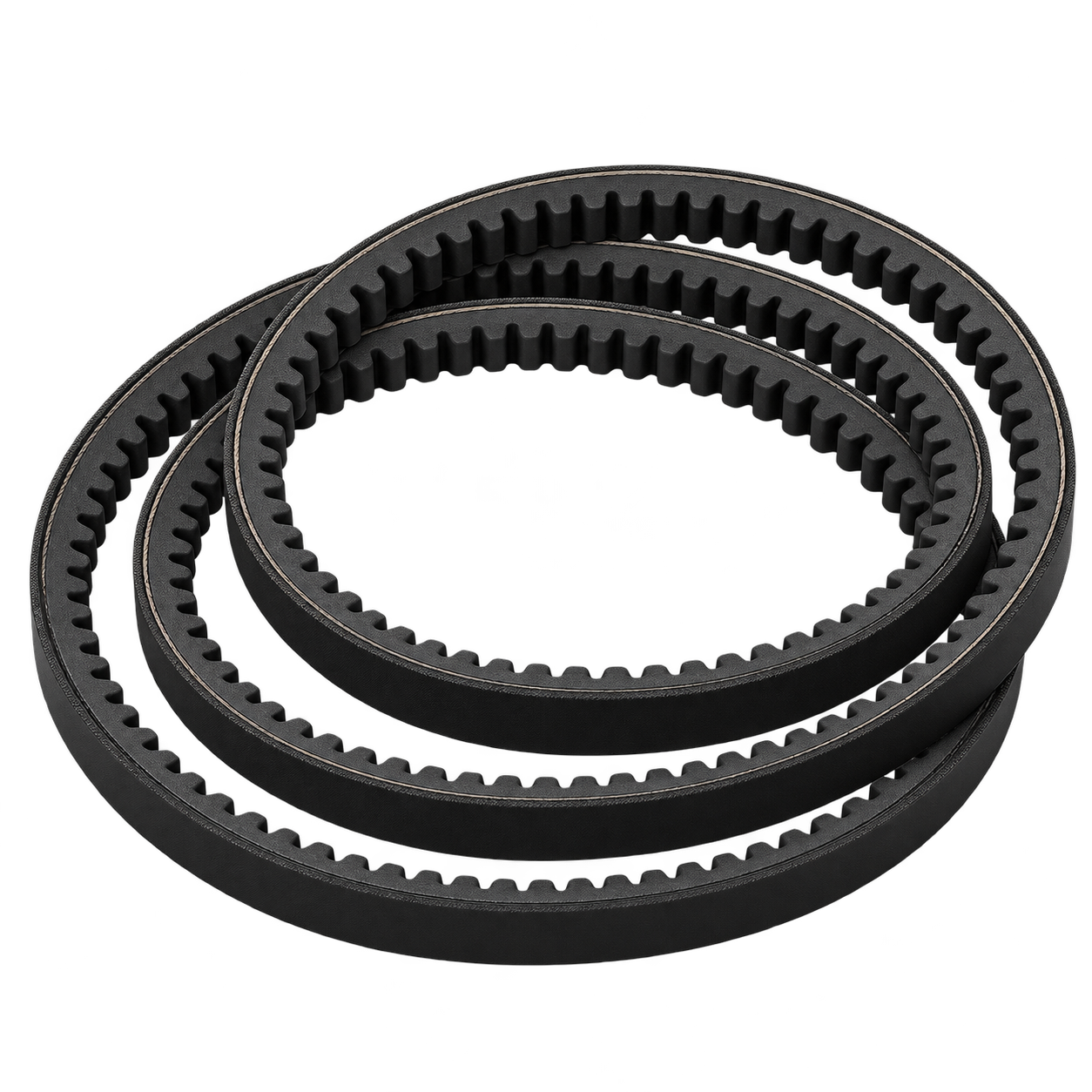
V-Belts
Network Industrial supplies industrial V-belts for belt-driven machinery in the UAE. Used in equipment such as pumps, ventilation fans, and compressors, V-belts transmit power through contact with grooved pulleys. Correct profile, length, and tension are essential to achieving dependable operation.
Description
Description
How V-Belts Work
A V-belt has a trapezoidal cross-section that fits into a corresponding pulley groove. Contact between the belt sides and the groove transfers rotational power from the driving pulley to the driven pulley.
The belt must match the pulley profile. An incorrect section or worn groove can reduce grip, increase slippage, and accelerate wear. Proper alignment and installation tension also affect belt life and bearing loads.
Common V-Belt Designs
Classical V-Belts
Used in many conventional industrial drives. The belt section and specified length must match the equipment requirements.
Narrow and Wedge V-Belts
Designed for drives that require power transmission within a compact space. These profiles require compatible pulley grooves.
Raw-Edge Cogged V-Belts
Notches on the inner surface improve flexibility around pulleys. These notches assist bending; they do not engage with pulley teeth like a timing belt.
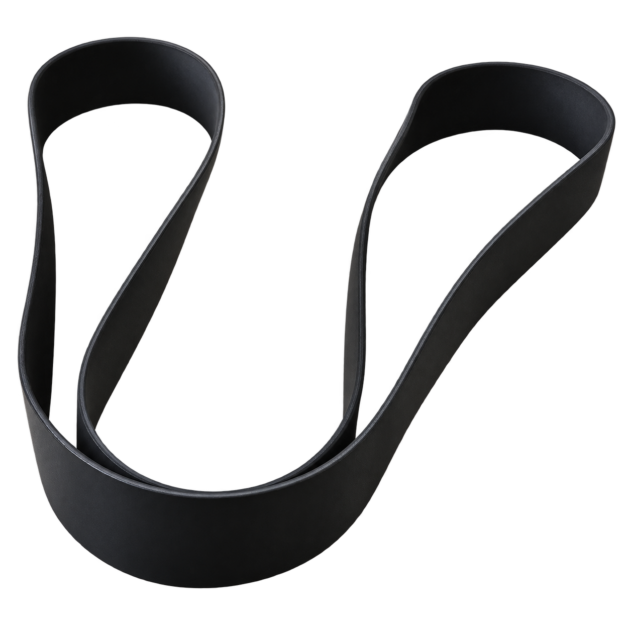
Banded V-Belts
Combine multiple V-belt sections with a common backing. They can help stabilize suitable drives exposed to fluctuating loads or belt movement.
Typical Applications
- HVAC equipment: Belt-driven fans and ventilation systems.
- Pumping equipment: Drives connecting motors to pumps.
- Compressors: Power transmission in compatible compressor assemblies.
- Manufacturing machinery: General industrial drives and production equipment.
Choosing a Replacement V-Belt
Start with the complete code printed on the existing belt and the equipment manufacturer’s specification. Belt length may be stated as inside, outside, or datum length, so a measurement alone may not identify the correct replacement.
For drives using several belts, follow the equipment manufacturer’s requirements for matched sets and replacement. Mixing worn and new belts can lead to uneven load sharing.
Details to Include in Your Inquiry
- Existing belt code and profile.
- Length and the measurement reference used.
- Number of belts in the drive.
- Equipment model, motor power, and operating speed.
- Exposure to heat, oil, dust, or moisture.
- Required quantity.
Frequently Asked Questions
Can a cogged V-belt replace a timing belt?
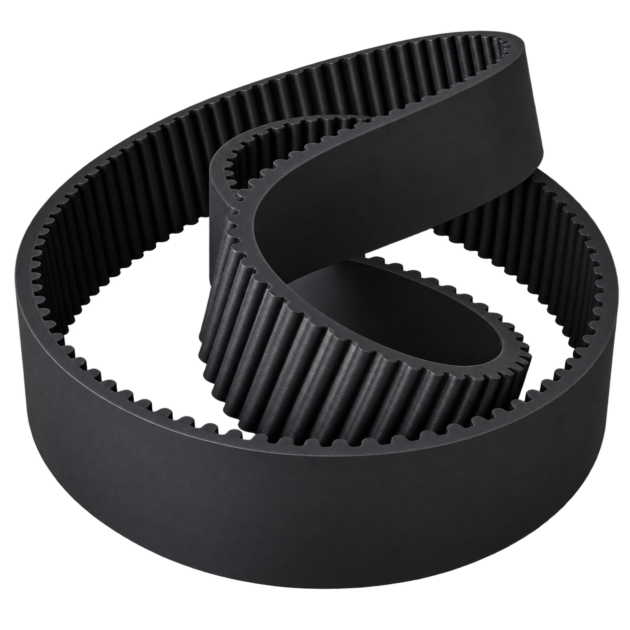
No. A cogged V-belt transmits power through friction. A timing belt uses teeth that mesh with a matching pulley. Their drive requirements are different.
Why does a V-belt slip or wear quickly?
Possible causes include incorrect tension, pulley misalignment, worn grooves, contamination, or a belt that does not match the drive. Check the equipment before fitting another replacement.
Request a V-Belt Quote
Send Network Industrial your belt reference, equipment details, and required quantity. Include clear photographs of the markings and pulley arrangement if the belt code is difficult to read.
Request a V-Belt Quote
Delivery Info
- Standard and Express delivery services are available for all items.
- Shipping costs are calculated at the checkout page (after delivery option & destination confirmation).
- Tracking is available for all delivery options.
- Items are delivered during standard business hours.
Reviews
There are no reviews yet.